Conditions and Treatments

Specialized OCD Therapy
OCD is frequently misunderstood. It is not simply a preference for order or cleanliness. It is a disorder of doubt, threat, urgency, and false responsibility that can consume extraordinary amounts of time and emotional energy.
For many people, OCD feels less like a single fear and more like an endless demand for certainty. The mind insists that something may be wrong, dangerous, immoral, incomplete, contaminated, or unresolved, then refuses to let go until you do something to feel better. Relief may come briefly, yet it rarely lasts. Soon the doubt returns, often stronger than before.
Many clients are surprised to learn that OCD can look nothing like the stereotypes. It may involve hours of invisible mental rituals, repeated reassurance-seeking, avoidance of ordinary situations, confessing, researching online, replaying memories, monitoring bodily sensations, seeking the “right” feeling, or trying to become completely certain about questions that cannot be solved with certainty.
Common presentations include:
Contamination fears
Checking rituals
Intrusive violent or sexual thoughts
Relationship OCD
Scrupulosity
Health anxiety features
“Just right” sensations
Mental rituals and reassurance-seeking
You may recognize yourself in experiences such as these:
rereading messages to make sure nothing inappropriate was said
needing repeated reassurance that you are not a bad person
Doubting whether you truly love your partner
Feeling unable to leave the house without checking locks or appliances
mentally reviewing past events for proof
avoiding knives or sharp objects despite no desire to harm anyone
washing long after you know you are already clean
Feeling deeply unsettled until something feels exactly right.
OCD often attacks what matters most. People who care deeply about morality may develop scrupulosity. Loving partners may become trapped in relationship doubt. Responsible people may feel crushing fear about causing harm. The content can vary widely, but the underlying cycle is remarkably consistent.
The gold-standard treatment for OCD is Exposure and Response Prevention (ERP). ERP helps you face triggers gradually while reducing the rituals that keep the cycle alive. Through repeated practice, the brain learns that anxiety can rise and fall without compulsions, uncertainty can be tolerated, and feared thoughts do not need to control behavior.
This work can be challenging, yet it is also deeply liberating when done skillfully and collaboratively. Many clients discover that the freedom they assumed was impossible becomes increasingly attainable through steady treatment.
You do not need to be symptom-free before beginning. You do not need perfect motivation. You only need willingness to start.

Specialized anxiety therapy
Unlike OCD, which is often driven by intrusive thoughts and rituals aimed at reducing doubt or preventing feared outcomes, anxiety disorders more commonly revolve around chronic worry, panic sensations, feared evaluation, or avoidance of situations perceived as threatening. The treatment focus is therefore different: less emphasis on compulsions, more emphasis on changing fear patterns, reducing avoidance, and increasing confidence in your ability to cope.
For some, anxiety appears as relentless worry that moves from one topic to the next and rarely allows genuine rest. The mind remains preoccupied with future problems, worst-case scenarios, responsibilities, finances, health, relationships, or decisions that feel impossible to settle. For others, anxiety arrives in surges of panic marked by racing heart, shortness of breath, dizziness, trembling, derealization, chest discomfort, or the fear that something catastrophic is about to happen.
Some clients feel constrained by intense fear of judgment, embarrassment, rejection, or scrutiny in social settings. Conversations become stressful, performance situations feel overwhelming, and ordinary interactions can carry disproportionate emotional cost. Others struggle with highly specific fears tied to driving, flying, vomiting, needles, enclosed spaces, contamination, animals, heights, storms, elevators, or other situations they know are manageable in theory yet difficult to face in practice.
You may recognize yourself in experiences such as these:
Declining invitations because social situations feel draining
avoiding highways after a panic attack
repeatedly seeking reassurance about health concerns
overpreparing for routine tasks out of fear of mistakes
postponing important decisions until certainty feels possible
sitting near exits in public places,
carrying “just in case” items everywhere
structuring daily life around the prevention of anxiety rather than the pursuit of meaning.
Treatment is directed toward identifying the specific patterns sustaining your anxiety, gradually relinquishing safety behaviors, strengthening your capacity to tolerate uncertainty, and rebuilding confidence through purposeful action. Depending on your needs, therapy may draw from Cognitive Behavioral Therapy (CBT), Dialectical Behavior Therapy (DBT), Mindfulness-Based Cognitive Therapy (MBCT), exposure-based interventions, and other evidence-based approaches tailored to the mechanisms maintaining distress.
Therapy is not about eliminating every anxious sensation. It is about changing your relationship with fear so it no longer dictates the boundaries of your life. Many clients discover that confidence is not the absence of anxiety; it is the willingness to move forward without waiting to feel perfectly certain or comfortable.
Whether your anxiety reflects Generalized Anxiety Disorder, Panic Disorder, Social Anxiety Disorder, phobias, or overlapping concerns, meaningful progress is possible. Fear can become smaller. Life can become larger.
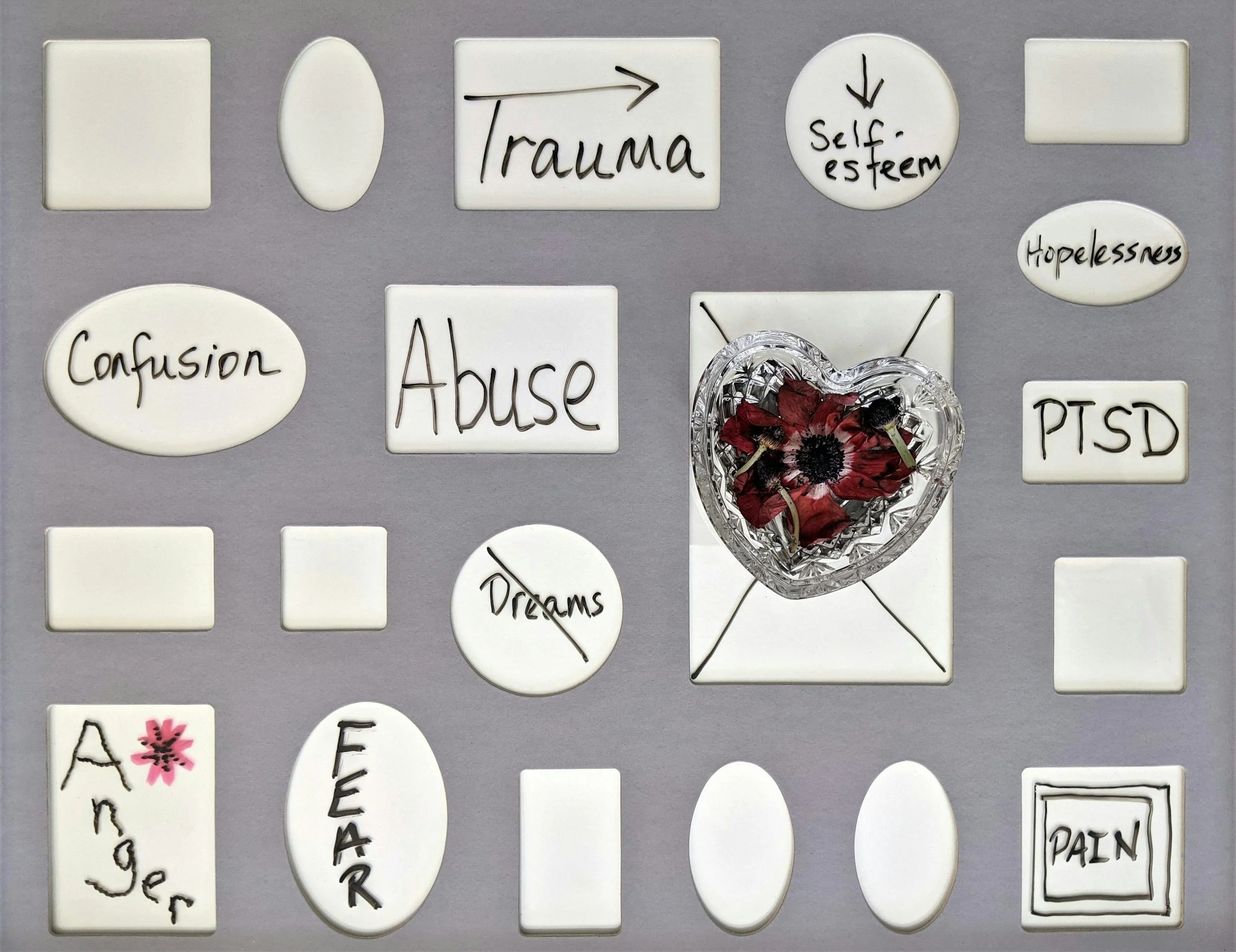
SPECIALIZED TRAUMA THERAPY
Trauma can persist in the nervous system long after danger has ended. Many clients carry hypervigilance, shame, emotional numbing, distrust, self-blame, or patterns that once ensured survival but now create suffering.
For some, trauma remains vividly present through intrusive memories, nightmares, physiological reactivity, flashbacks, or the sense that the past is still happening now. For others, it appears in quieter forms: emotional disconnection, difficulty trusting others, chronic guilt, irritability, avoidance of reminders, collapse responses, or a persistent expectation that danger is always near.
Trauma often reshapes identity as much as it affects symptoms. People may begin to see themselves as broken, permanently damaged, responsible for what happened, unworthy of care, or incapable of feeling safe again. Relationships can become strained. Opportunities may be avoided. Life can narrow around protection rather than growth.
Many survivors also struggle with the confusing reality that trauma responses once made sense. Hypervigilance may have helped you detect danger. Emotional numbing may have reduced overwhelm. Distrust may have been protective. The problem is not that these responses developed; it is that they can continue long after they are no longer needed.
You may recognize yourself in experiences such as these:
Feeling on edge even in safe environments
startling easily
scanning rooms for exits
replaying painful memories
withdrawing from people who care about you
Feeling detached from your own emotions
Blaming yourself for another person’s actions
struggling with intimacy
Becoming overwhelmed by reminders that others would barely notice
Feeling frustrated that you “should be over it by now.”
Trauma treatment should move at a pace that is clinically wise rather than rushed. We work first to increase stability, strengthen coping capacity, and create a sense of groundedness before asking you to process more than your system is ready to hold. Effective trauma therapy balances courage with safety and depth with structure.
Depending on your needs, therapy may draw from Cognitive Processing Therapy (CPT), Prolonged Exposure (PE), Cognitive Behavioral Therapy (CBT), mindfulness-based approaches, and other trauma-informed interventions tailored to your history and current goals. Some clients benefit from challenging trauma-based beliefs. Others benefit from gradually approaching avoided memories and cues. Many benefit from learning how to regulate the nervous system in the present.
The aim is not to erase the past or pretend it did not matter. It is to loosen its grip on the present so that your choices are guided less by survival patterns and more by the life you want to build.
Many clients discover that healing does not mean forgetting what happened. It means no longer living as though the trauma still defines every possibility ahead.